How to Become a Top Producer: The Real Difference Between Average and Exceptional
Apr 09, 2026At every MDRT event, I am reminded of one important truth: the gap between average and exceptional is rarely talent alone.
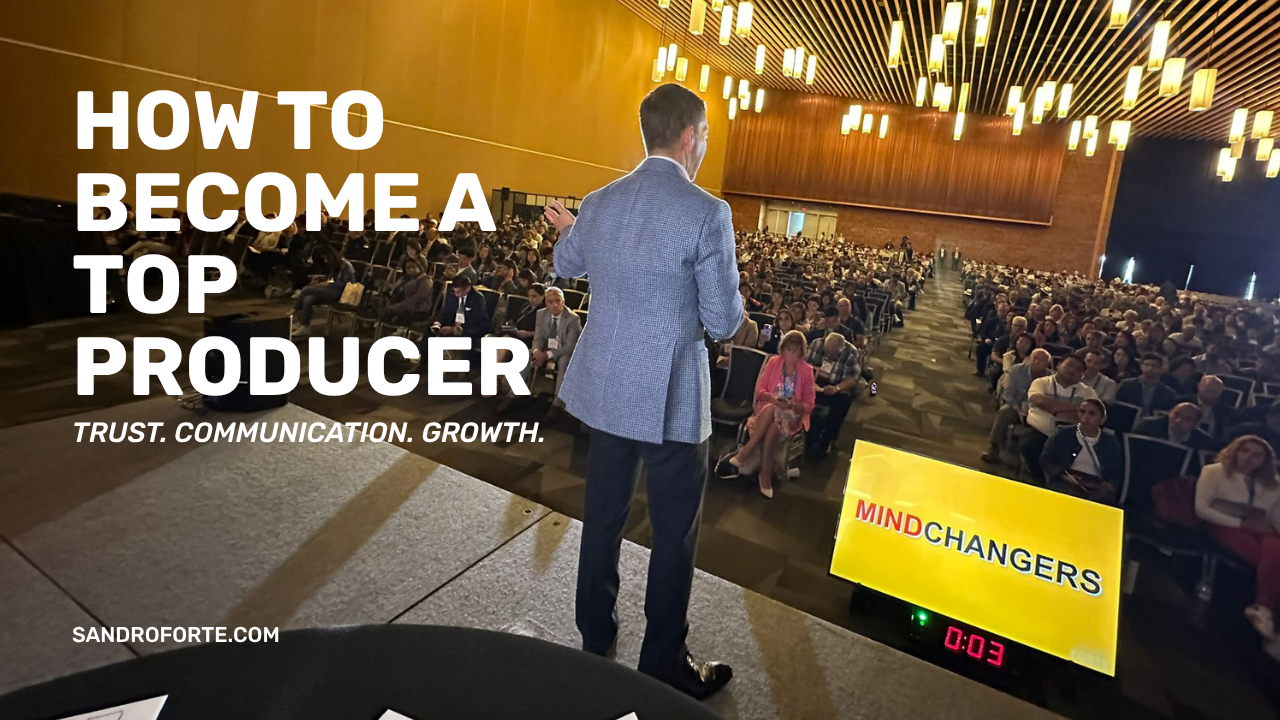
In 2024, at the MDRT Annual Meeting in Vancouver, Ross Bernstein and I shared a session on how to become a top producer. As I reflected on our conversation afterwards, I realised once again that the people who consistently perform at the highest level do not simply know more. They do more of the right things, more often, and with greater intentionality.
Top producers do not leave success to chance.
They build it.
They build it through better habits, better communication, stronger positioning, and a much deeper understanding of how trust is formed. In my experience, if you want to become one of the very best in this profession, you need to stop thinking like a salesperson and start thinking like a trusted adviser with a repeatable process.
The truth about top producers
One of the biggest myths in business is that top producers are somehow born different.
I do not believe that.
I believe top producers are made through consistency, awareness, discipline, and the willingness to do things that most people either overlook or avoid. That includes how they show up, communicate, ask questions, follow up, and make people feel.
Ross and I approached the subject from slightly different angles in Vancouver, but we were really saying the same thing: the most successful people create momentum because they understand human nature. They understand that business growth is built on relationships, and relationships are built on trust.
10 principles to become a top producer
1. Lead with generosity
Ross opened with a simple but powerful principle: be generous. People like doing business with givers, not takers. That is such an important distinction because too many people enter meetings, social media, and networking conversations already thinking about what they want to get.
Top producers reverse that mindset.
They ask how they can help.
They introduce people.
They create opportunities for others.
They share ideas.
They add value before expecting a return.
Generosity builds goodwill, and goodwill often becomes opportunity.
2. Master empathy
I shared in Vancouver that empathy runs to the heart of everything we do. We may operate in a sales profession, but clients do not respond well to feeling sold. They respond to feeling understood.
That means a top producer must become exceptional at:
- listening
- reading emotion
- identifying concerns
- understanding objectives
- making people feel safe enough to be honest
Without empathy, even a technically correct recommendation can fail to land.
3. Control the relationship professionally
There is a huge difference between being client-focused and becoming subservient. That was one of the strongest points I made on stage. When advisers subconsciously believe they need the client more than the client needs them, they lose control of the relationship very early.
That is why the first meeting matters so much.
For me, there are two crucial rules at the beginning of a new relationship:
- We are both deciding whether we can work together.
- The quality of advice I can give depends on the quality of information you give me.
That approach creates accountability, honesty, and mutual respect. It also saves enormous amounts of time and prevents weak, drawn-out relationships that never really go anywhere.
4. Work smarter, not harder
This is not just a nice phrase. It is a business principle.
There are only two ways to grow: work harder or work smarter. In my experience, top producers eventually realise that sustainable growth comes from smarter structure, not endless effort.
Working smarter means:
- setting expectations clearly
- guiding the relationship
- building a process people trust
- avoiding wasted meetings
- focusing on quality over activity for activity’s sake
The adviser who controls the process usually controls the outcome.
5. Use social media to strengthen relationships
Ross offered a brilliant framework for social media: use it to honor, acknowledge, and thank others. Not to posture. Not to become controversial. Not to chase vanity.
That matters.
Used properly, social media can reinforce trust, remind people you are active, and make clients and connections feel appreciated. Used badly, it can damage credibility and create distance. Top producers know the difference.
6. Make your message about them
One of the most important principles in prospecting and communication is this: never make it about you.
People care most about:
- themselves
- their problems
- their objectives
If your message does not connect with one or more of those, it is weaker than it needs to be.
Whether you are reaching out on social media, meeting a prospect, or asking for an introduction, the same rule applies. Show people that you understand their world.
7. Let social proof do some of the work
For years, many advisers leaned heavily on brochures and polished explanations. But people often make decisions based on consensus — what other people think, say, and experience. That was a major theme of the session.
Testimonials matter.
Authority matters.
Introductions matter.
Client advocacy matters.
The stronger your reputation becomes, the less you have to push.
8. Create an emotional connection first
If you want a prospect to take action, logic alone is rarely enough. There has to be an emotional attachment first. That is why I always prefer to begin with right-brain questions before jumping into detail.
Questions like:
- What do you really want?
- If money were no object, what would life look like?
- When would you really like to retire?
- What do you want for your children?
Those questions create a sense of feeling, vision, and emotional ownership. Once that exists, logic has a much better chance of turning into action.
9. Use scarcity and positioning wisely
When people sense that you are in demand, it changes the way they perceive you. That may not always feel fair, but it is real.
Top producers do not position themselves as permanently available and waiting by the phone. They position themselves as busy, valuable, and structured. That creates respect.
Scarcity is not arrogance.
It is positioning.
And good positioning often improves trust.
10. Stay creative when others go quiet
Ross made another excellent point: everybody goes through slumps, but top producers do not stay there. They adapt. They get creative. They respond quickly. They become easy to work with. They try new angles. They create value when everyone else becomes passive.
That is often where the next wave of growth begins.
Practical bullet points: how to become a top producer
Here are the key takeaways in simple form:
- Be a giver before you become an asker.
- Use empathy to build trust faster.
- Set clear rules of engagement in the first meeting.
- Stop reacting and start leading the relationship.
- Use social media to honor others, not promote yourself endlessly.
- Make your communication about the client, not about you.
- Lean into testimonials, authority, and social proof.
- Ask emotional questions before presenting logical solutions.
- Position yourself as valuable, not permanently available.
- Get creative when business slows down.
- Become easier to work with.
- Respond faster.
- Focus on long-term trust, not short-term persuasion.
Final thought
Top production is not one breakthrough moment.
It is the result of repeated behaviors.
The very best people in this profession understand that success is built through trust, visibility, generosity, communication, accountability, and consistency. They know how to make people feel understood. They know how to add value. And they know that the strongest businesses are never built on pressure alone.
If you want to become a top producer, do not simply ask how to sell more.
Ask how to become more trusted.
More visible.
More valuable.
More memorable.
And be more intentional in every conversation you have.
Because in the end, top producers are not just better at business.
They are better at people.
If you want to build a stronger, more productive and more rewarding business, start by mastering the principles in this article — then apply them consistently. Success does not happen by accident. It happens by design.
Download my best business resources for FREE!
This will help you to get multiple referrals (personal introductions) from new clients by using the right words and changing the dynamic of a question few of us find easy to ask.
We hate SPAM. We will never sell your information, for any reason.